Book your appointment now – we look forward to seeing you.
Whether it’s an initial consultation, treatment or advice, contact us in writing or by phone. We will get back to you promptly with suggested appointment times.
Active physiotherapy – often also called exercise therapy or, traditionally, remedial gymnastics – is a therapeutic method that involves targeted and individually adapted exercises. The aim is to promote natural mobility, strength, coordination and body awareness for the long term. At our practice, we actively support you on your way to being free of pain and enjoying a better quality of life.
In brief
As a rule, 1–2 sessions per week are ideal, supplemented by regular home training 2–3 times a week, individually adapted to your complaints.
Full answer: How often should exercise therapy be done?Yes, remedial gymnastics is suitable for all ages. The exercises are adapted individually to each person’s physical abilities and needs.
Full answer: Is remedial gymnastics also suitable for older people?Yes, active physiotherapy is covered by your health insurer, provided you have a doctor’s prescription.
Full answer: Is active physiotherapy paid for by health insurers?Unlike purely passive therapy methods, active physiotherapy focuses on patients taking an active part in their own therapy. The exercises are tailored individually to your needs, complaints and physical abilities, and support your recovery for the long term.
The main benefits of active physiotherapy at a glance:
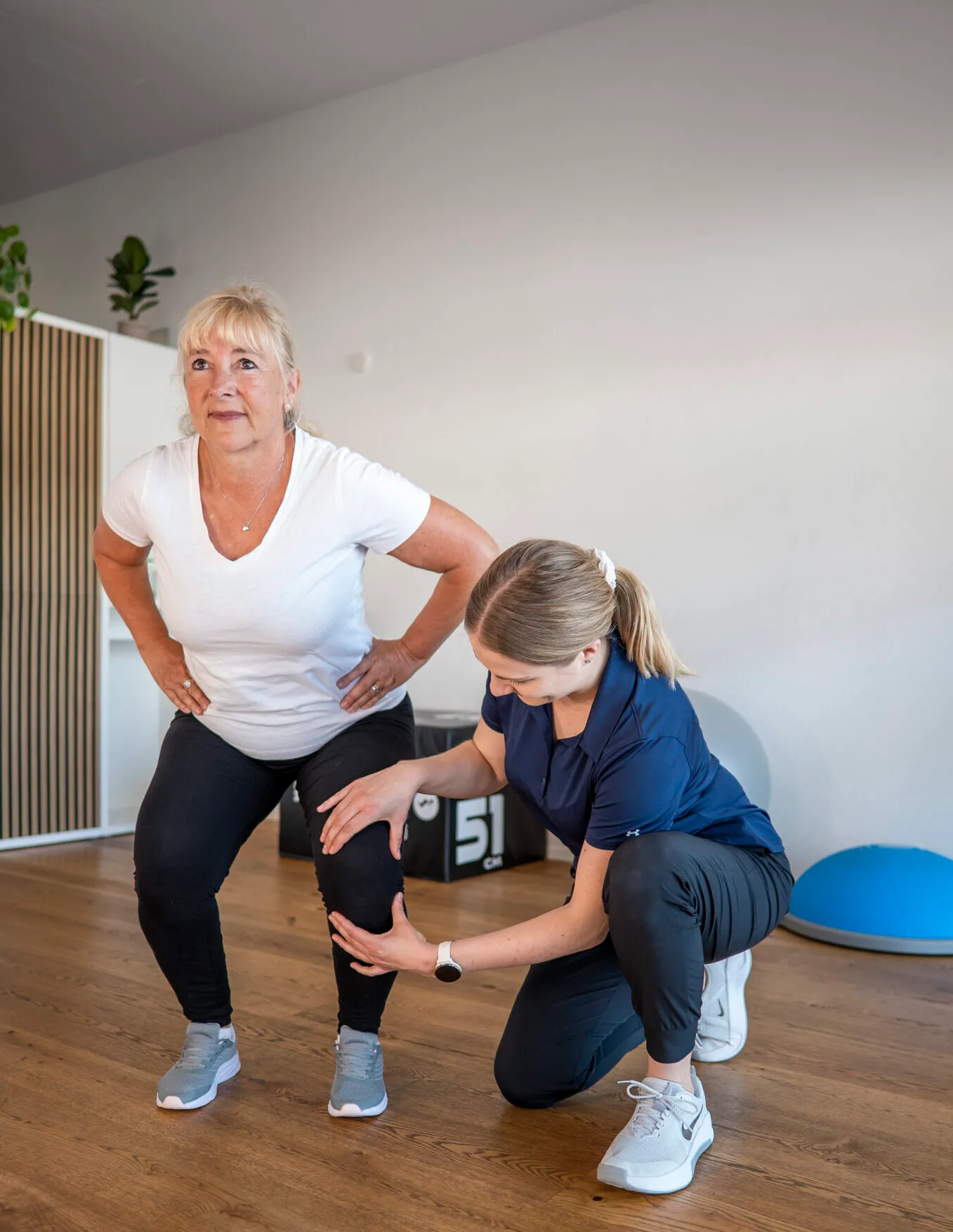
Exercise therapy, the core of active physiotherapy, uses targeted physical exercises to give the best possible support to the healing process. Regular, individually adapted training has a direct effect on various bodily functions:
Targeted exercises build up the strength of specific muscle groups in order to stabilise the joints and spine and to compensate for faulty loading. This not only improves posture but also provides effective protection against future injuries and degenerative changes.
Active exercises specifically increase the mobility of joints by distributing synovial fluid more effectively and releasing adhesions in the tissue. This is essential for reducing pain and restoring natural movement function.
Special coordination and posture training ensures that you can perform movements more economically, more safely and with less pain. This also includes targeted exercises that are helpful in everyday life and correct poor posture in the long term.
Regular exercise therapy can relieve chronic pain by correcting muscular imbalances and specifically releasing tension. In addition, exercise promotes the release of the body’s own pain inhibitors and improves overall quality of life.
Exercise releases endorphins, increases general well-being and strengthens mental resilience in everyday life. Regular training helps to reduce stress, ease low mood and boost self-confidence through progress in training.
We create individual training programmes and adjust them continuously to ensure the best possible results.
Active physiotherapy, or remedial gymnastics, is suitable for a wide range of complaints and conditions. It is particularly recommended for:
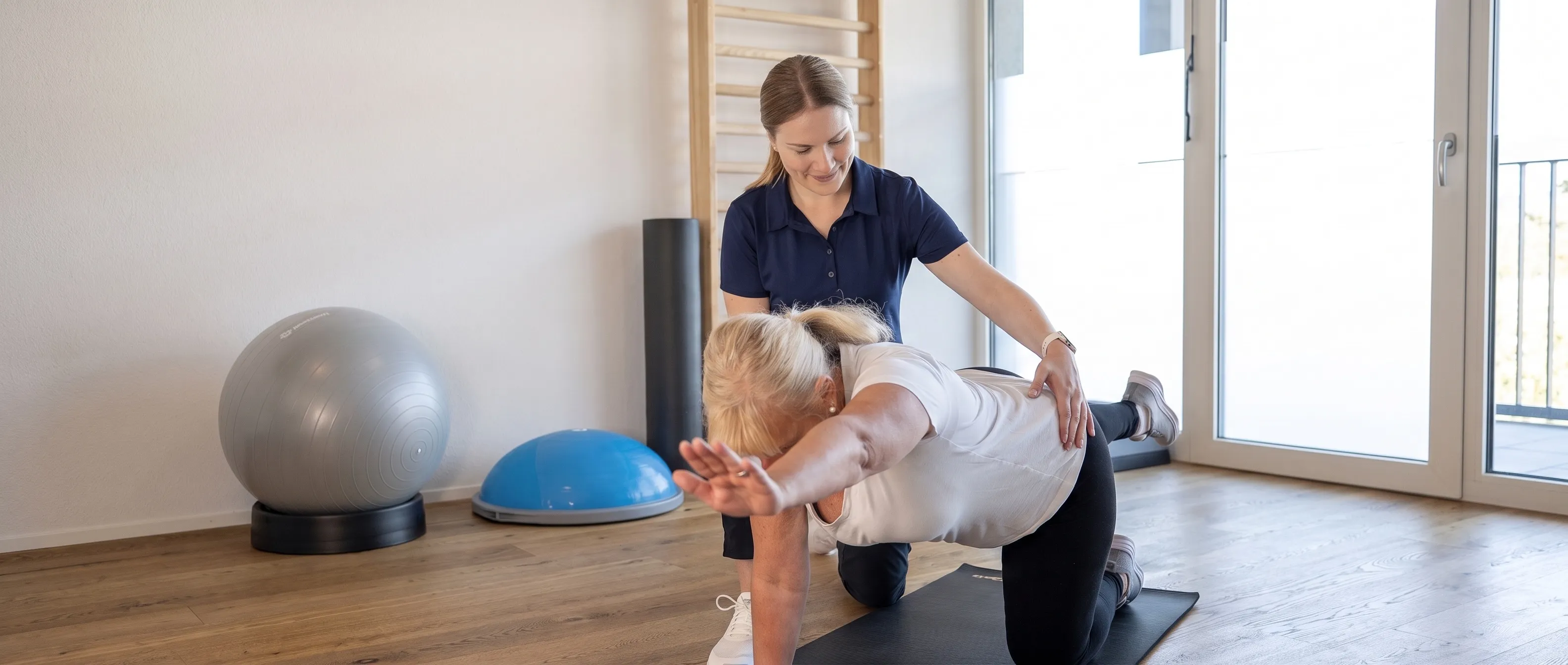
Each session is tailored to you individually and may include the following:
We support you with targeted instructions and by constantly checking that you are performing the exercises correctly, and we give you helpful tips for training at home.
Treatment of musculoskeletal complaints.
Prevention and rehabilitation for sports injuries.
Therapy for jaw joint complaints.
Active physiotherapy, also known as exercise therapy or remedial gymnastics, comprises individually tailored exercises that specifically strengthen the muscles, promote mobility and relieve pain.
Exercise therapy is effective for back and joint pain, after surgery, for sports injuries and for neurological and chronic conditions such as osteoarthritis or rheumatism.
The terms “remedial gymnastics” and “exercise therapy” are traditional names for active physiotherapy measures in which patients participate actively through targeted exercises. The modern term “active physiotherapy” is now often used to distinguish this approach clearly from passive methods such as massage or manual techniques. In terms of content, there is hardly any difference between remedial gymnastics, exercise therapy and active physiotherapy – the names vary mainly for historical and regional reasons.
As a rule, 1–2 sessions per week are ideal, supplemented by regular home training 2–3 times a week, individually adapted to your complaints.
Yes, remedial gymnastics is suitable for all ages. The exercises are adapted individually to each person’s physical abilities and needs.
Regular exercise therapy strengthens the muscles and improves mobility, and can therefore reduce chronic pain effectively.
Yes, active physiotherapy is covered by your health insurer, provided you have a doctor’s prescription.
Yes – in fact, this is very important. Your therapist will show you specific exercises that you can do on your own at home to give your therapy the best possible support.
Whether it’s an initial consultation, treatment or advice, contact us in writing or by phone. We will get back to you promptly with suggested appointment times.
May we use Google Analytics (via Google Tag Manager) to measure how our website is used? In doing so, data may be transferred to Google in the USA. More in our privacy policy.