
Flurina Aeschlimann
Additional training: Kinesio taping (2019)
Treatment in: German and English
Kinesio taping is a physiotherapy method used to gently relieve strain on muscles and joints and to promote healing. The elastic, skin-friendly tapes stimulate blood and lymph flow, can relieve pain and help to improve mobility. Tapes can also be applied to stabilise joints and muscles.
In brief
As a rule, the tape stays on the skin for 3 to 7 days – even when showering or doing sport.
Full answer: How long does kinesio tape stay on the skin?Applying the tape is normally painless, and most patients find it pleasant.
Full answer: Is kinesio taping painful?Occasionally, skin irritation or allergic reactions to the adhesive may occur.
Full answer: Are there any risks or side effects with kinesio taping?With a doctor’s prescription, basic or accident insurance usually covers one or two tape applications; further ones are billed separately.
Full answer: Is kinesio taping covered by health insurers?Correct application is crucial if the tape is to be fully effective: at our practice in Boll, we not only apply the tapes professionally but, if required, also show you how to apply kinesio tape safely yourself – individually adapted to your complaints and your physical condition.
Whether for acute injuries, chronic complaints or prevention: we will advise you personally on whether and how kinesio taping can usefully complement your therapy.
In kinesiology taping, elastic, skin-friendly adhesive tapes are applied directly to the skin. They contain no active ingredients and work purely through mechanical stimuli.
The main effects at a glance:
The tape lifts the skin slightly – this improves the supply to the tissue and, together with movement, helps to drain lymph fluid.
Sensory receptors in the skin are stimulated, which can have a positive effect on muscle activity and relieve pain.
Unlike rigid tapes, kinesio tape preserves full mobility – a great advantage, especially in everyday life and during sporting activities.
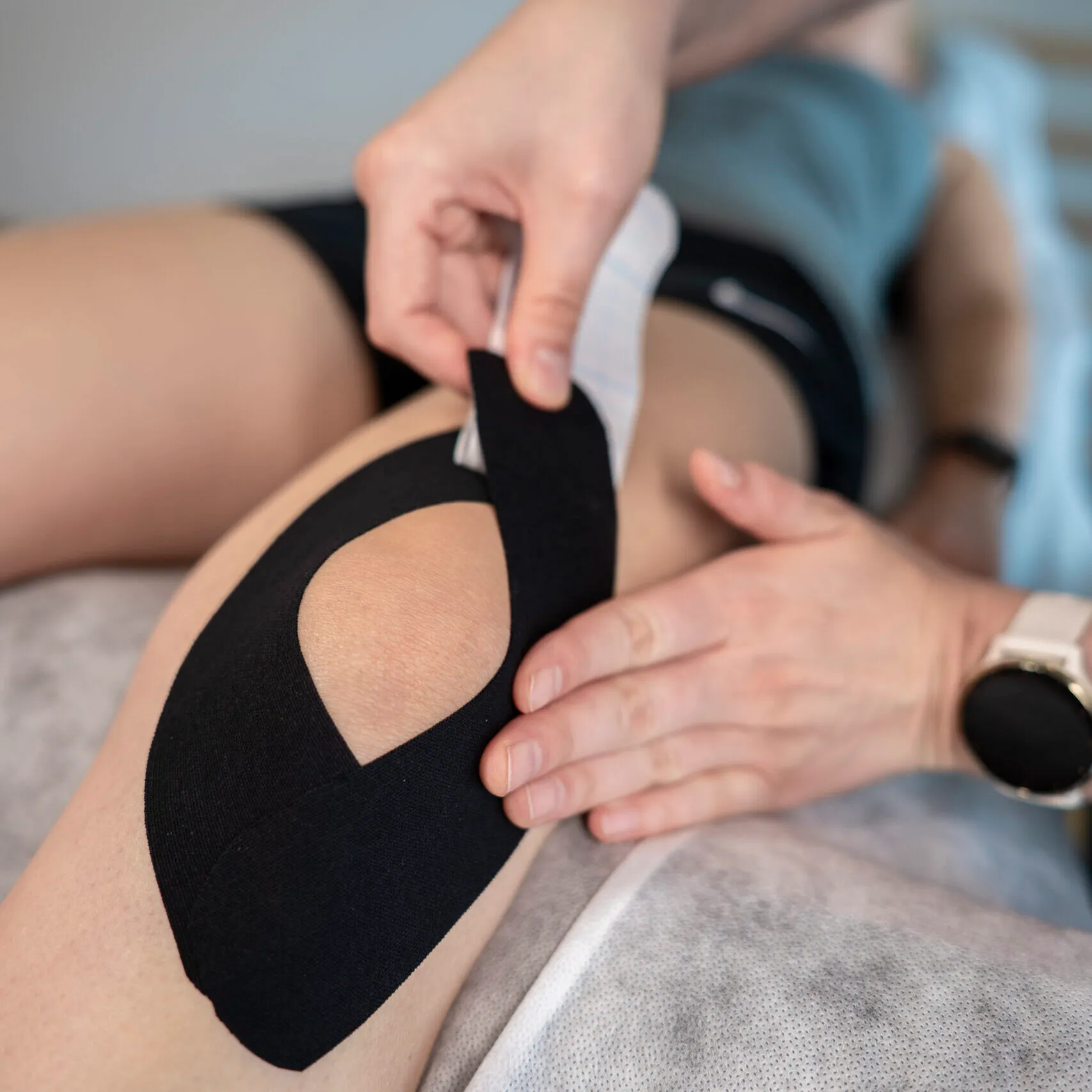
Kinesiology tape uses the body’s natural movements to support healing in a targeted way. The elastic strips are applied to the skin so that they exert a gentle pull on the skin with every movement. This creates fine shifts between the skin and the subcutaneous tissue, which can have several positive effects:
Lifting the skin supports the flow of blood and lymph fluid and can thus reduce swelling.
Stimulating mechanical and sensory receptors triggers feedback to the nervous system, which can help to regulate muscle tension.
Unlike non-elastic tapes, kinesio tape preserves mobility – a decisive advantage, especially for active people and in sport.
Activating what is known as the gate control mechanism can reduce pain signals.
Many patients find the tape pleasant and supportive. Kinesio taping is particularly valued in everyday life and during sporting activities because it does not restrict movement but accompanies it. Even though scientific research has not yet conclusively established exactly how it works, numerous reports of experiences and practical applications show positive effects for a range of different complaints.
The method is often used to complement other forms of therapy – particularly for:
Applying kinesio tape requires sound knowledge of anatomy, the course of the muscles and the correct technique. We therefore recommend always having the first tape applied by a qualified physiotherapist.
At our practice in Boll, we attach great importance to adapting the taping individually to your complaints and physical condition. We will be happy to advise you on whether, and to what extent, re-applying the tape yourself is sensible and possible. If it is needed for stability over a longer period or for support in everyday life, we will show you the correct technique step by step.
After all, even though there are numerous instructions for taping at home, incorrect application can mean that the tape does not achieve its full effect – or, in the worst case, even makes complaints worse. What matters is correct positioning, the right amount of stretch in the tape and knowledge of the contraindications.
Our aim is to train you so that you can tape yourself safely and effectively when needed – always knowing when the support of a professional is still advisable.

Treatment of musculoskeletal complaints.
Prevention and rehabilitation for sports injuries.
Therapy for jaw joint complaints.
Kinesio tape is elastic and allows full mobility, whereas Leukotape is non-elastic and is mostly used to provide stability through immobilisation.
As a rule, the tape stays on the skin for 3 to 7 days – even when showering or doing sport. If skin irritation occurs, it should be removed sooner.
Applying the tape is normally painless, and most patients find it pleasant.
Occasionally, skin irritation or allergic reactions to the adhesive may occur. At our practice, we use skin-friendly, low-allergen tapes where necessary.
If kinesio taping is part of a physiotherapy treatment and you have a corresponding doctor’s prescription, the cost of the taping is, as a rule, covered once or twice by basic insurance or accident insurance. However, the costs of multiple tape applications or of a whole roll of tape are not included in the benefits of the health insurer and are billed separately in accordance with our price list.
We will be happy to tell you about the exact conditions in a personal consultation and whether the costs can be covered in your case.
The tape is often used for muscle tension, sports injuries, back pain, joint complaints and swelling.
For safe and effective use, we recommend having the tape applied by trained professionals. After instruction, re-applying the tape yourself is possible in some cases.
Yes, there are various cut shapes (e.g. I, Y, X or octopus shape) and colours. The colour has no medical significance; the choice is a matter of personal preference.
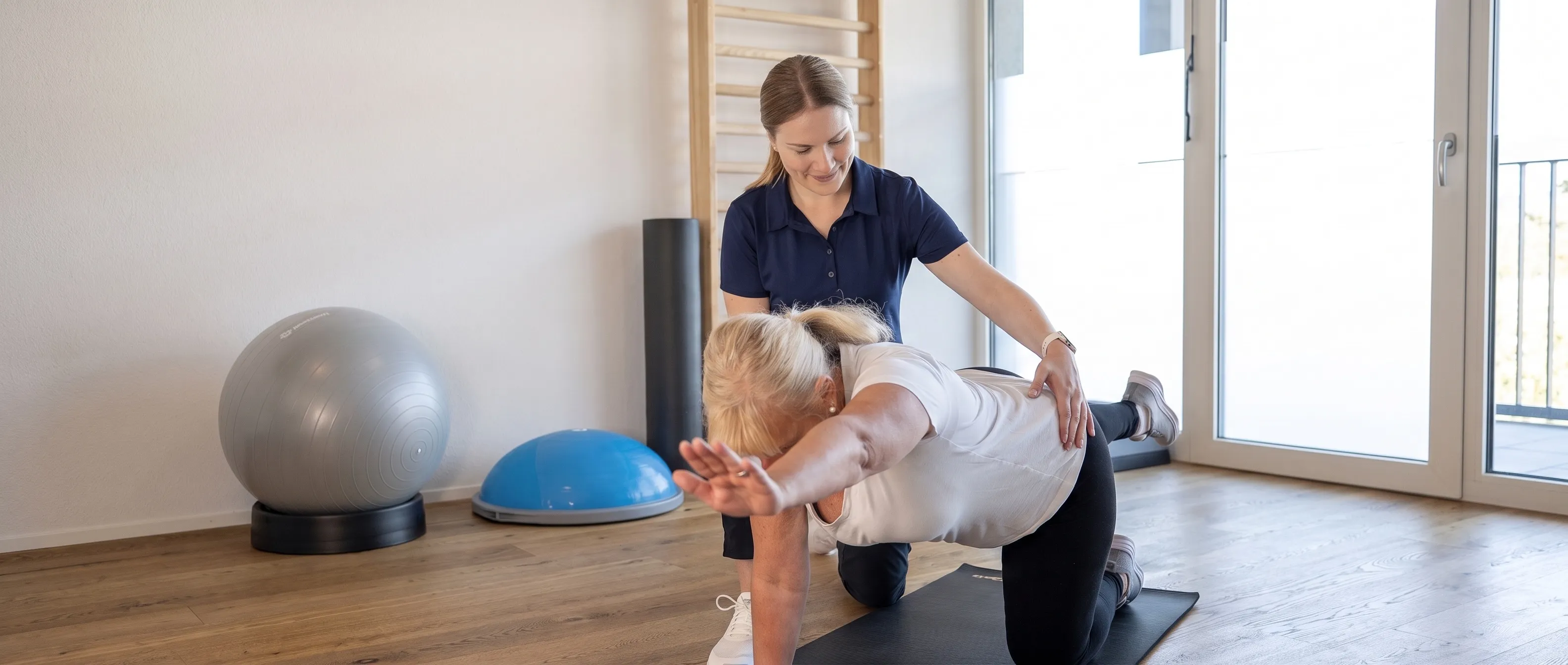
Whether it’s an initial consultation, treatment or advice, contact us in writing or by phone. We will get back to you promptly with suggested appointment times.
May we use Google Analytics (via Google Tag Manager) to measure how our website is used? In doing so, data may be transferred to Google in the USA. More in our privacy policy.