
Flurina Aeschlimann
Area of expertise: Trigger point treatment & dry needling
Treatment in: German and English
Trigger point treatment is an effective method of treating what are known as myofascial trigger points – localised areas of hardening in overactive muscles that can trigger pain and radiate to other parts of the body. These areas of hardened muscle often go unrecognised for a long time, but can cause both acute and chronic complaints. At our practice in Boll, we use trigger point treatment specifically to release muscular tension, relieve pain and improve mobility.
In brief
We often recommend one to two treatments a week over several weeks, adapted to your individual progress.
Full answer: How often should trigger point treatment be carried out?The treatment can be uncomfortable for a short time, especially when direct pressure is applied to an active trigger point.
Full answer: Is trigger point treatment painful?As a rule, trigger point treatment is well tolerated. Temporary discomfort similar to sore muscles or slight bruising in the treated area is possible.
Full answer: Are there any risks or side effects?If trigger point treatment is part of a course of physiotherapy and you have a doctor’s prescription, the costs are, as a rule, covered by health insurance.
Full answer: Is trigger point treatment covered by health insurance?Our manual trigger point treatment deliberately differs from invasive techniques such as dry needling. It is based on a combination of targeted pressure, stretching and complementary measures to relax the muscles – always adapted to your individual complaints and needs.
Trigger points are hyperirritable zones within a taut band of muscle. Typically, they trigger pain when pressed, and this pain can also radiate to other areas (referred pain). Commonly affected areas include the shoulder and neck area, the back muscles and the jaw region.
Typical symptoms:
Trigger points can be caused by:
The aim of trigger point therapy is to identify these painful points, treat them in a targeted way and thereby resolve muscular imbalances and chains of tension.
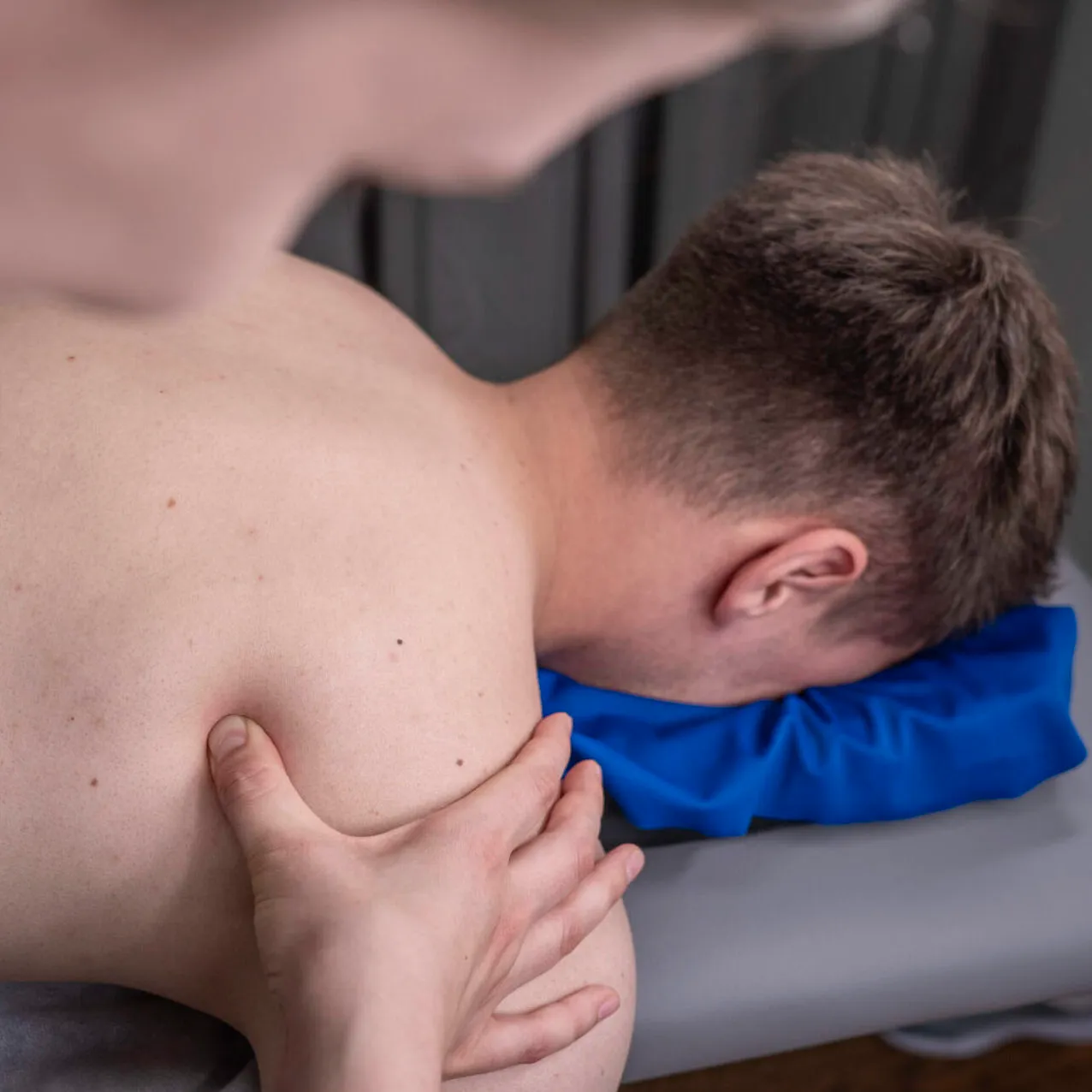
Trigger point treatment is suitable for numerous complaints – including:
Trigger points – also known as myofascial trigger points – are localised, painful areas of hardening within a muscle. These sensitive points are particularly common in muscle groups that are under strain or overused. Typical regions where trigger points occur include:
A trigger point can often be felt as a small, hardened “knot” within the muscle. Pressing on this point typically causes radiating pain – known as referred pain. For example, trigger points in the neck can trigger tension headaches, and trigger points in the shoulder area can cause pain that extends into the arm.
The exact location of trigger points varies depending on the muscle group. Particularly well-known examples are trigger points in the trapezius muscle, in the muscles around the shoulder and in the muscles of the jaw joint, which can be associated with tension headaches.
Well-founded trigger point treatment requires precise knowledge of these pain points and their typical referral patterns – which is why it is particularly important for the therapy to be carried out by trained professionals.
Trigger point therapy is often used for:
Trigger point therapy focuses specifically on local areas of hardened muscle. Unlike fascia therapy, which addresses the connective tissue network of fascia throughout the body, trigger point therapy precisely treats painful points within the muscles.
We work with targeted manual techniques to identify and treat the trigger points. These include:
The treatment is tailored individually to your complaints and can be combined with other forms of therapy.
Both methods aim to treat myofascial trigger points – but with different approaches:
Trigger point treatment: A manual technique that works with pressure, stretching and muscle relaxation. Suitable for all patients, including people who prefer to avoid needles.
Dry needling: An invasive method in which trigger points are pierced directly with a fine needle. Offered at our practice as a separate method.
We will be happy to advise you individually on which form of treatment is best suited to your situation.

Area of expertise: Trigger point treatment & dry needling
Treatment in: German and English

Area of expertise: Trigger point treatment & dry needling
Treatment in: German, English, French, Italian and Spanish
Treatment of musculoskeletal complaints.
Prevention and rehabilitation for sports injuries.
Therapy for jaw joint complaints.
Trigger point treatment works manually with pressure and stretching, whereas dry needling uses a needle to treat trigger points directly. Both methods aim to release muscular hardening, but use different techniques.
The treatment can be uncomfortable for a short time, especially when direct pressure is applied to an active trigger point. However, many patients already feel relaxation or relief during the treatment.
That depends on the type and duration of the complaints. We often recommend one to two treatments a week over several weeks, adapted to your individual progress.
If trigger point treatment is part of a course of physiotherapy and you have a doctor’s prescription, the costs are, as a rule, covered by health insurance. We are happy to advise you individually on this.
Trigger point therapy is more targeted and concentrates on individual hardened, painful points. A classic massage, by contrast, treats larger areas and is more relaxing.
They often develop as a result of poor posture, repetitive strain, overload from sport, injuries or emotional stress.
Mild forms of self-treatment are possible, for example with special exercises or fascia rollers. For targeted and safe trigger point treatment, however, we recommend care from trained professionals.
Above all for muscular pain, tension, tension headaches, shoulder pain or back pain where myofascial trigger points are involved as a cause.
As a rule, trigger point treatment is well tolerated. Temporary discomfort similar to sore muscles or slight bruising in the treated area is possible.
Trigger points are hypersensitive spots in the muscles that react to pressure and can trigger pain – often radiating to other parts of the body.
Targeted stretching exercises, regular exercise, conscious posture and stress reduction can support the effect of the treatment in the long term.
The treatment is carried out directly on the muscle – e.g. in the shoulder blade area, neck, lower back or buttocks – depending on the individual assessment.
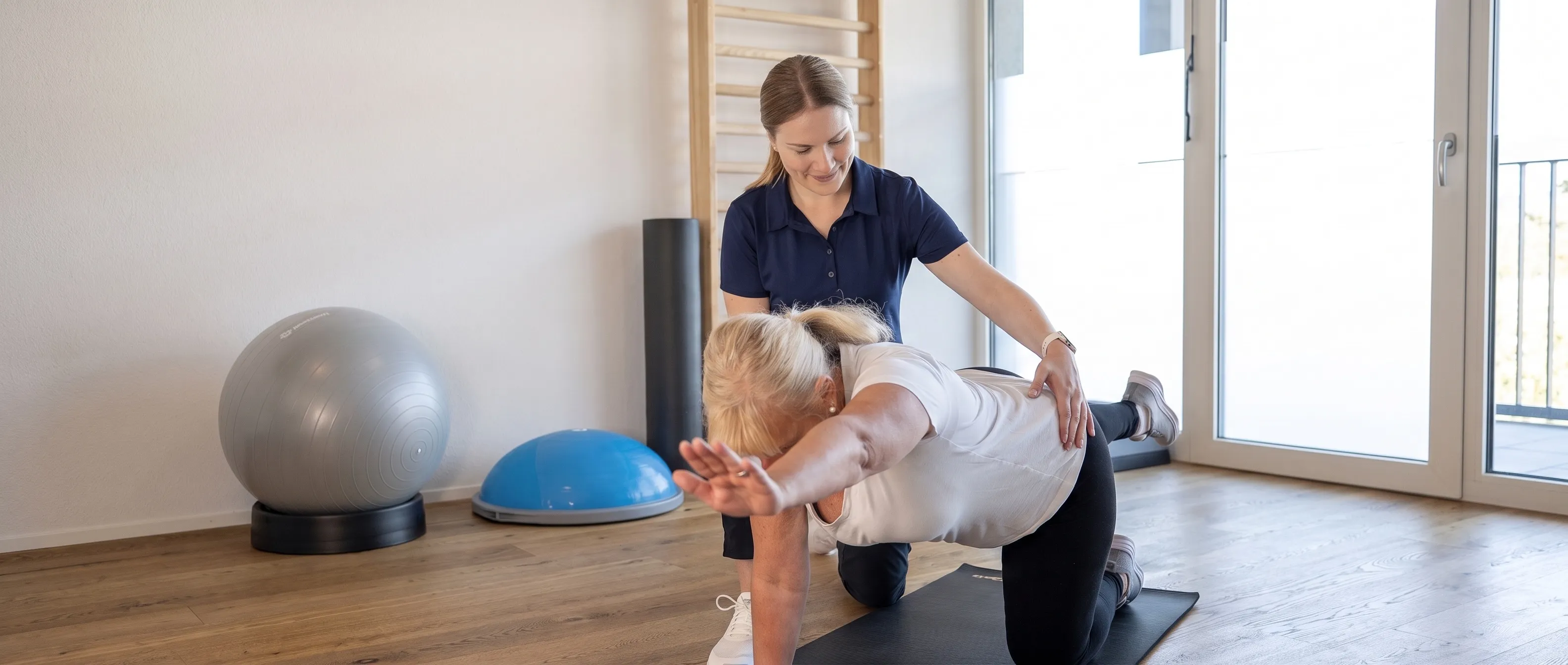
Whether it’s an initial consultation, treatment or advice, contact us in writing or by phone. We will get back to you promptly with suggested appointment times.
May we use Google Analytics (via Google Tag Manager) to measure how our website is used? In doing so, data may be transferred to Google in the USA. More in our privacy policy.