Flurina Aeschlimann
Additional training: Craniomandibular dysfunction (CMD) – Akademie Vollmer (2022)
Treatment in: German and English
Jaw tension, pain when chewing or grinding your teeth at night can be signs of a temporomandibular joint disorder (TMD), also known as craniomandibular dysfunction (CMD). At our practice in Boll, we offer well-founded physiotherapy support for jaw joint complaints – for noticeable relief and a new quality of life.
In brief
They include jaw pain, teeth grinding, facial tension, headaches, dizziness and ear noises such as tinnitus.
Full answer: What are typical TMD symptoms?A few targeted sessions are usually enough to notice an improvement. We will discuss the best frequency together.
Full answer: How often should I come for TMD therapy?With a doctor’s prescription, the treatment is covered by health insurance. We are also happy to advise you as a self-paying patient.
Full answer: Is craniomandibular dysfunction therapy covered by health insurance?TMD (craniomandibular dysfunction) is a common functional disorder in which the jaw joint and the surrounding muscles are thrown out of balance. As a complex condition, it shows itself not only through jaw pain but also through complaints in other parts of the body.
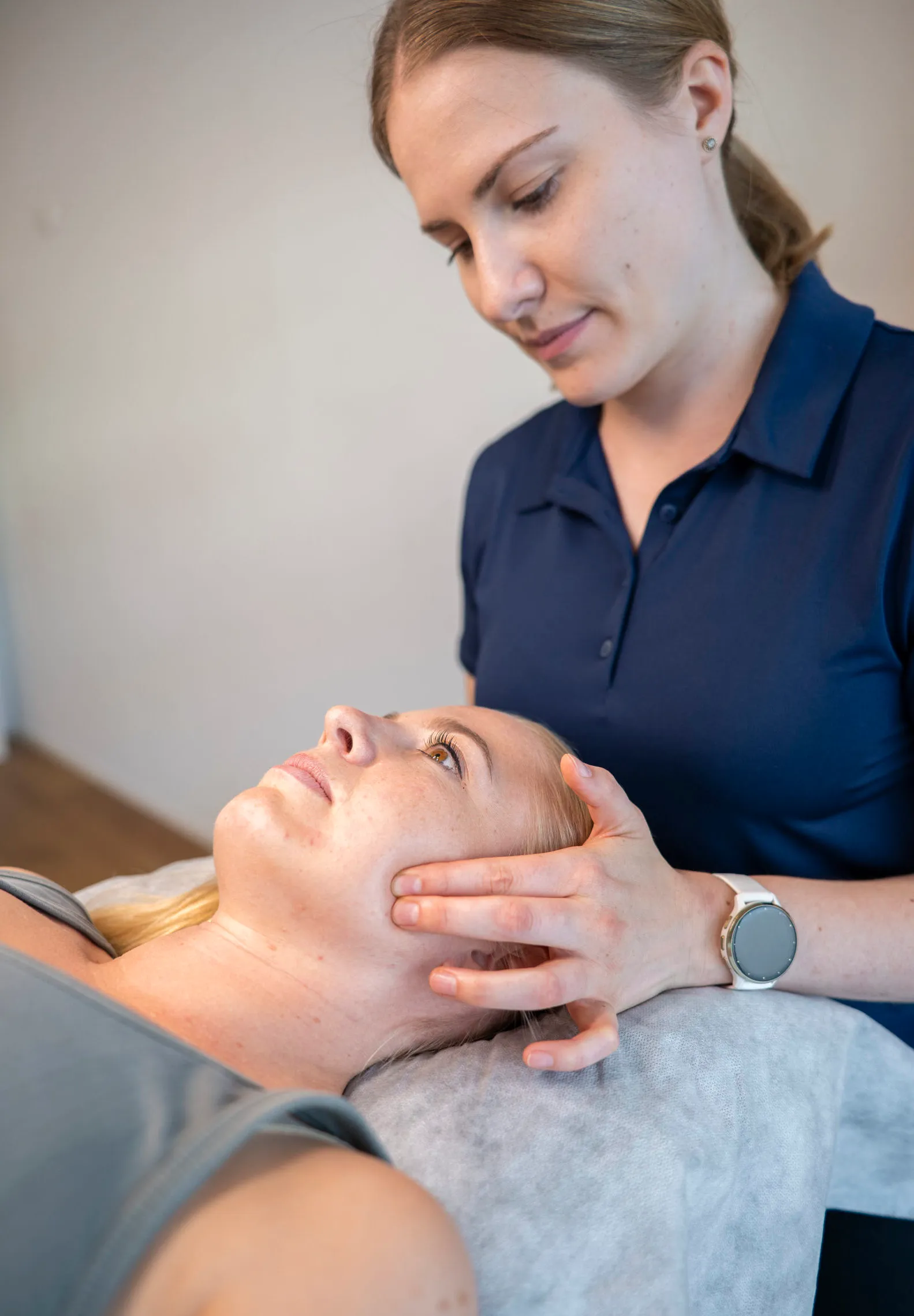
Our therapy aims to treat the causes of the complaints for the long term – not just the symptoms. To do so, we analyse how the muscles work together, movement patterns and psychosomatic factors.
The jaw joint is strongly dependent on muscular and neurological influences. Incorrect loading – for example from teeth grinding, poor posture or stress – can lead to overload and pain.
Our TMD therapy takes a holistic view of these factors. Alongside passive techniques, your active participation is also central to the treatment.
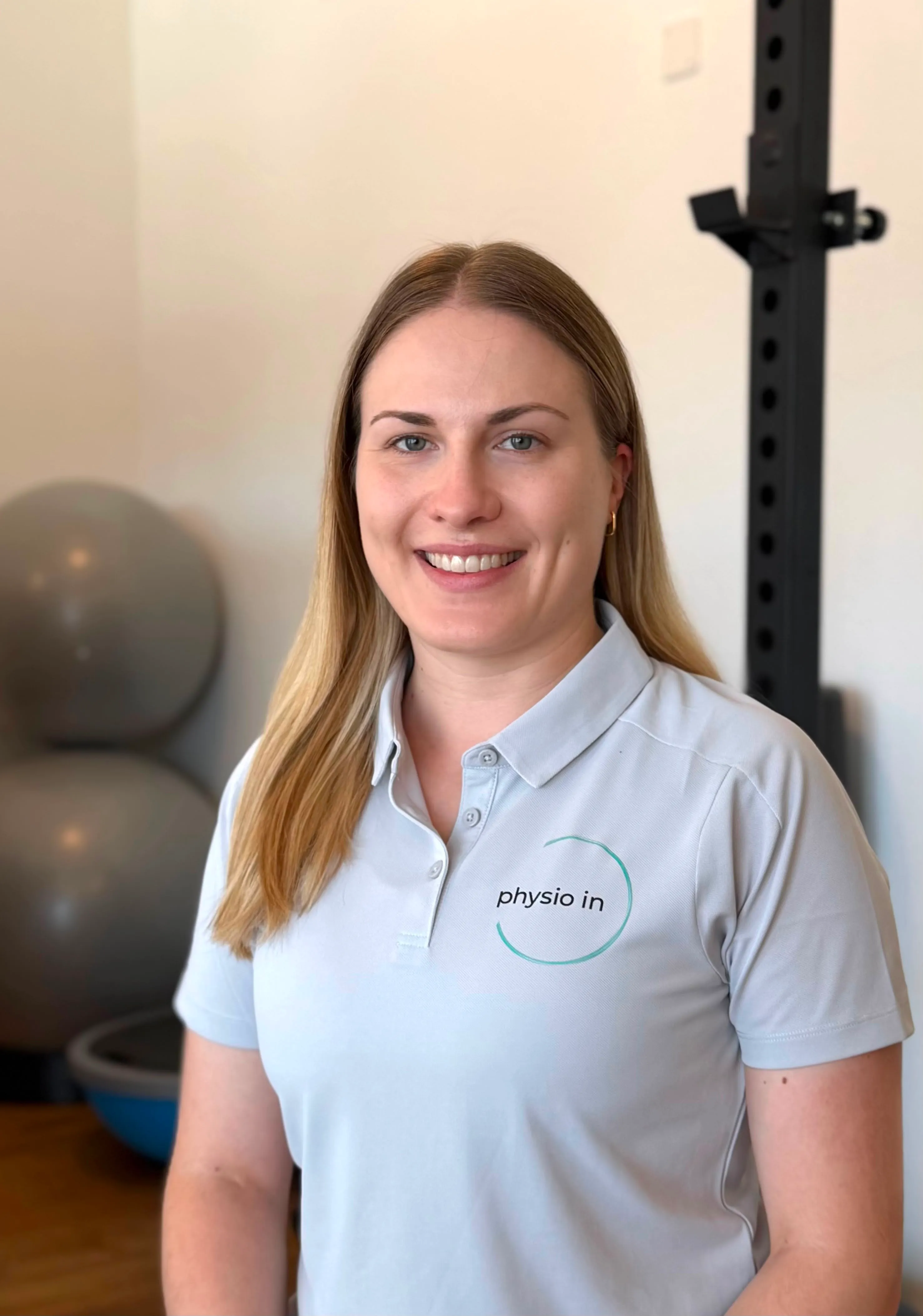
Additional training: Craniomandibular dysfunction (CMD) – Akademie Vollmer (2022)
Treatment in: German and English
Targeted treatment of trigger points to relax muscles
Gentle mobilisation techniques to restore joint function
Releasing tension and adhesions in the connective tissue
Individual strengthening and exercise programmes for lasting stability
Clear explanations and targeted guidance for your recovery
TMD covers a whole range of symptoms – often including symptoms outside the jaw. Individual pain can be a sign of TMD, but should always be assessed by a professional.
Typical signs are tension in the jaw, clicking noises when chewing, limited mouth opening or discomfort when speaking. Neck problems or headaches can also be part of it.
Physiotherapy can help to treat the cause – not just the symptoms. Relaxation exercises, manual techniques and targeted movement all help.
In many cases, yes. Targeted therapy can significantly relieve the complaints or resolve them completely. What matters is an individually tailored treatment plan.
They include jaw pain, teeth grinding, facial tension, headaches, dizziness and ear noises such as tinnitus.
A few targeted sessions are usually enough to notice an improvement. We will discuss the best frequency together.
With a doctor’s prescription, the treatment is covered by health insurance. We are also happy to advise you as a self-paying patient.
Yes, stress is often a key trigger of muscle tension in the jaw area. We also take these connections into account in therapy.
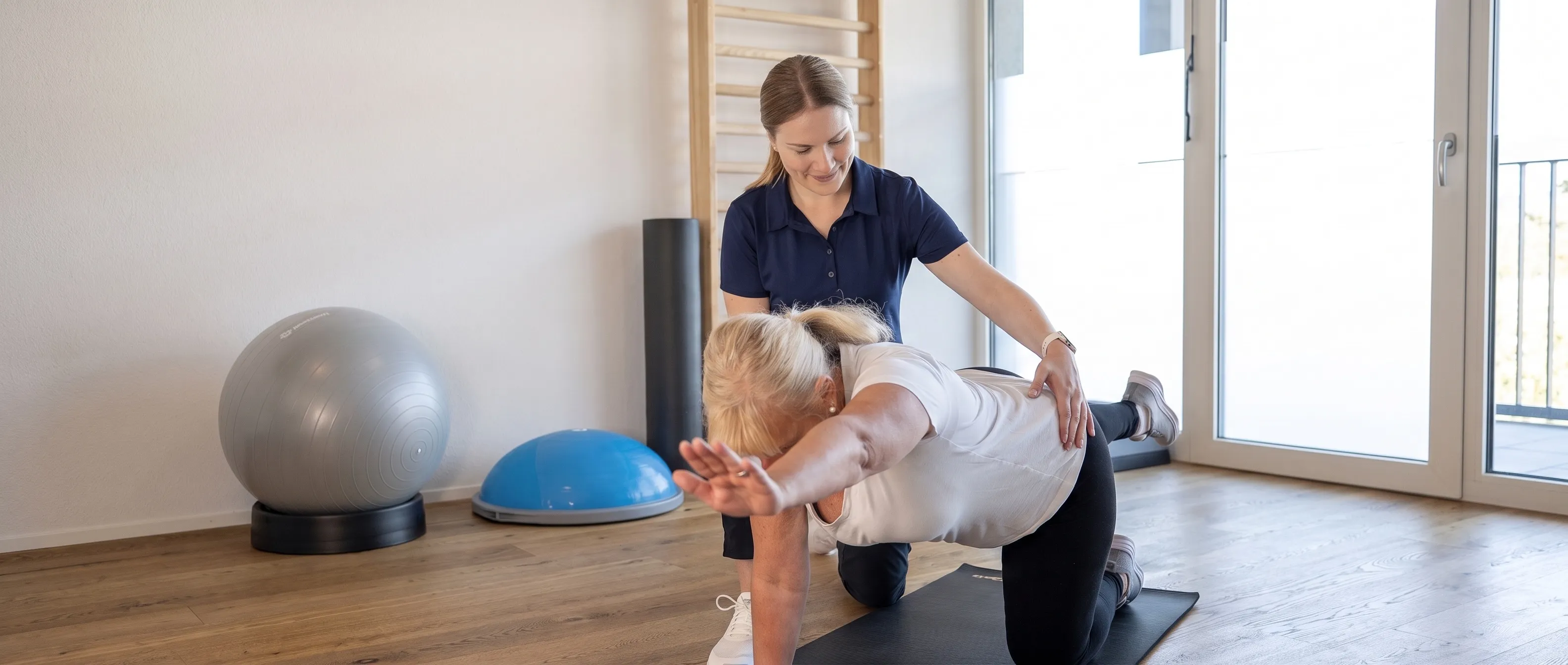
Whether it’s an initial consultation, treatment or advice, contact us in writing or by phone. We will get back to you promptly with suggested appointment times.
May we use Google Analytics (via Google Tag Manager) to measure how our website is used? In doing so, data may be transferred to Google in the USA. More in our privacy policy.