Targeted help for myofascial pain and myofascial pain syndrome – using specialised techniques of manual therapy and trigger point treatment.
What is fascia therapy?
Fascia is the connective tissue that surrounds and connects our muscles, organs and joints. It forms a finely networked system throughout the body – and influences posture, movement, pain perception and even performance.
If fascia becomes stuck or hardened through lack of exercise, incorrect loading or stress, this can lead to restrictions and pain. Fascia therapy releases this tension in a targeted way and activates the natural elasticity of the tissue.
What is myofascial therapy?
Myofascial therapy is a specialised form of manual therapy that focuses on treating fascia, trigger points and myofascial pain. At our practice in Boll, we use it in a targeted way to relieve muscle tension, back pain, neck pain and myofascial pain syndrome. The method is particularly suitable for patients with chronic complaints that do not improve sufficiently with conventional physiotherapy alone.
Myofascial therapy targets the connective tissue (fascia) and what are known as myofascial trigger points. These small, hardened points in muscles and fascia can radiate pain to other parts of the body. Targeted manual techniques – such as pressure, traction or stretching – release the tissue, improve blood circulation and regulate muscle tone.
When is fascia therapy useful?
Fascia treatment can help with:
- Myofascial pain syndrome
- Chronic muscle pain (e.g. back, neck, shoulders)
- Headaches caused by muscle tension
- Restricted movement or “stiffness”
- Sports injuries and muscular imbalances
- Tension after operations or accidents
- Scar tissue and post-operative adhesions
- Complaints in combination with TMJ disorders (craniomandibular dysfunction, CMD) or poor posture
- Pain without a clear orthopaedic cause
Fascia therapy can also be used effectively to improve sporting performance or for prevention.
Methods & approach
In our practice, we rely on proven fascia therapy techniques. Treatment includes, among other things:
- Manual fascia mobilisation (e.g. targeted deep pressure, stretching techniques)
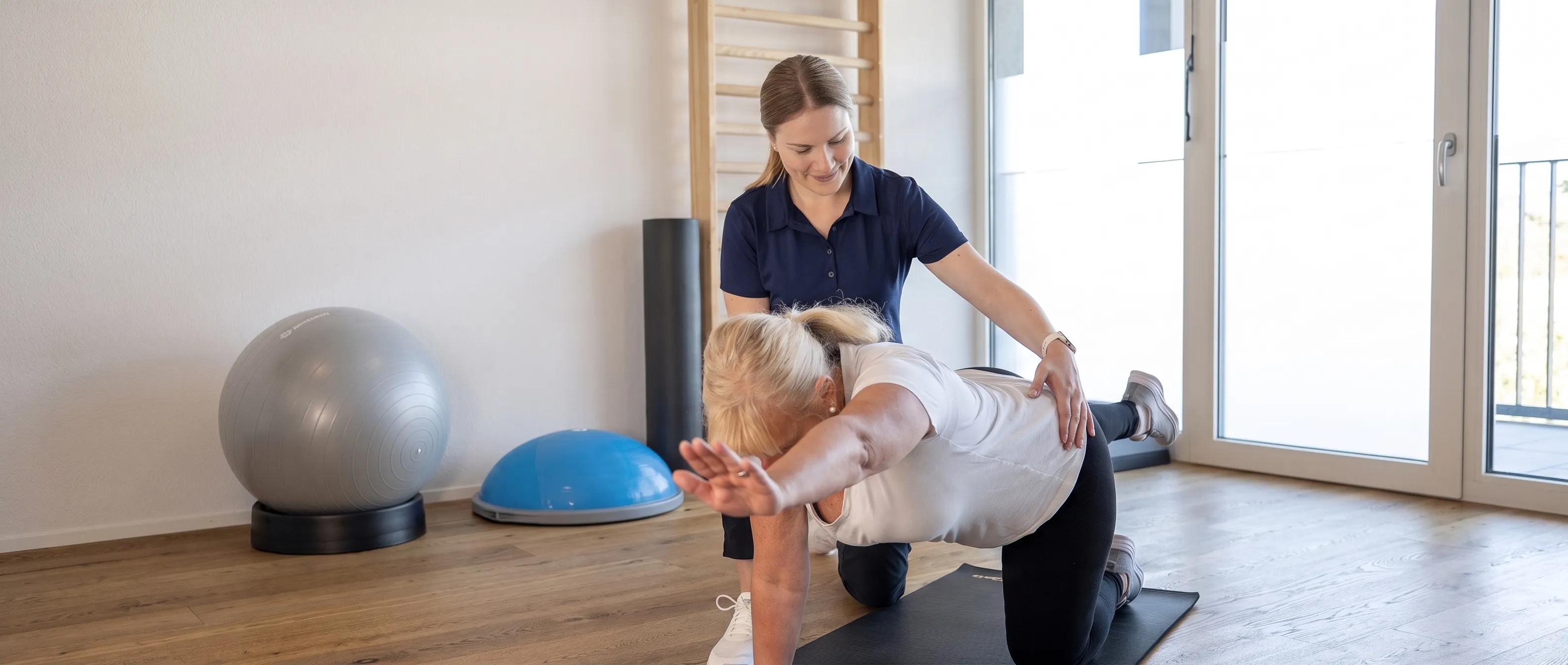
- Combination with active exercise therapy
- Fascia rollers and accompanying exercises to do on your own
- In addition: dry needling or trigger point therapy if trigger points are involved
The aim is to make the connective tissue network glide freely again, promote blood flow and relieve pain.
Effects of myofascial therapy
The treatment works through several mechanisms:
- Release of trigger points and fascial adhesions
- Relaxation of deep muscle structures
- Improved mobility and elasticity of the tissue
- Pain relief by breaking down patterns of tension
- Improved blood circulation and metabolism
The aim is to restore muscular balance – locally and systemically.
Myofascial pain syndrome – what is behind it?
Myofascial pain syndrome describes chronic pain caused by active trigger points in muscles and fascia. These often develop as a result of overuse, poor posture or stress. Typically, the pain does not occur directly at the site of the cause but radiates to other parts of the body.
Myofascial therapy is considered a very effective method of treating this type of pain – often with noticeable relief after just a few sessions.